
Originally Posted On: https://ikippahs.com/blogs/jewish-style/how-to-store-a-suede-kippah-so-it-keeps-its-shape-and-color
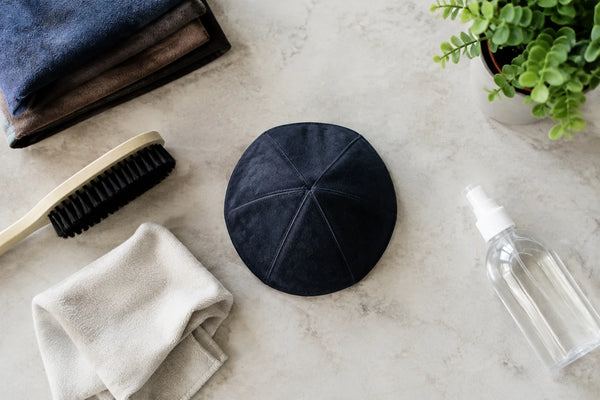
What You'll Need
Nothing fancy here. Most of it's already in your house — the whole job takes about 10 to 15 minutes per suede kippah.
-
A clean, dry suede kippah. Black, navy, or white all work. If it's been damp, let it air out first.
-
A soft suede brush or a clean, dry toothbrush. This lifts the nap and clears dust before storage.
-
Acid-free tissue paper. Plain white only. Colored tissue can transfer dye onto light suede.
-
A hard-sided box. A small rigid box keeps the crown from caving in. A shoebox with dividers works for several kippot.
-
A breathable cotton pouch (optional). Handy for a single kippah you carry or stash in a bag. Skip plastic, since it traps moisture.
-
A cool, dark shelf. Away from windows, radiators, and bathrooms.
-
Clean hands. Oils and lotion leave marks on suede, especially white suede.
Skill level: beginner. If you can fold a tissue, you've got this.
Storing a bunch after a simcha? Add a few extra boxes and separate each kippah with tissue. Keep suede apart from velvet, leather, and linen so dyes don't rub off.
A suede kippah can look sharp for years or turn into a sad, flat disc in one season. The difference usually comes down to where it sits when nobody's wearing it.
Most guys toss it in a jacket pocket, a gym bag, or the pile on a dresser. Bad move. Suede is soft, napped, and picky. Squash it and the crown caves. Leave it by a window, and the black fades to a tired gray, while a white suede kippah picks up every smudge it touches.
The good news? Storage is cheap, quick, and takes about five minutes once you know the routine. A little tissue, a hard-sided box, and a spot out of the sun do most of the work. (Yes, really.) So if you've invested in a dressier everyday kippah, here's how to make it last.
What You'll Achieve and What You'll Need Before You Start Storing Your Suede Kippah
A man tosses his kippah into a coat pocket after Shabbos lunch, and by Monday it's creased, flattened, and slightly faded where the lining pressed against it. Sound familiar? That's what bad storage does. The goal here is simple: a Suede kippah that comes out of storage looking the way it went in. Same shape. Same color. No dents.
Gather your supplies first. Doing this once saves you from replacing a dressy piece every year, and it's cheaper than you'd think.
Materials checklist: tissue, breathable pouch, rigid box, soft brush
-
Acid-free tissue paper: it holds the dome shape from inside.
-
Breathable cotton pouch: plastic traps moisture, so skip it.
-
Rigid box: a small, firm one keeps coat pockets and bag straps from crushing the crown.
-
Soft suede brush: it lifts the nap before you pack it away.
Quick check: is your black suede kippah or white suede kippah clean and dry?
Don't store it damp. Ever. Press a dry cloth to the surface and look for dark patches. A black suede kippah hides dirt, so check under bright light. A white suede kippah shows everything, so look for oil marks near the rim. Brush gently in one direction, then let it air out for an hour. Compare it with a Wool kippah if you own both, since wool tolerates a bit more handling than suede does.
Step 1: Brush and Dry Your Suede Kippah Before It Goes Away
Never store a dirty or damp suede kippah. Skin oil, hair product, and moisture all settle into the nap, and a closed drawer turns them into stains and stiff patches by next month. Ten minutes now saves the color.
Here's the routine, start to finish:
-
Let it air out. Set the kippah on a clean shelf for a few hours after wearing, away from radiators and direct sun. Heat dries suede out and cracks it.
-
Brush gently. Use a soft suede brush and stroke in one direction to lift the nap. Short, light passes work better than scrubbing.
-
Dab, don't rub. If a spot of dirt remains, press a suede eraser on it, then brush again.
-
Check for dampness. Press the inside rim with a fingertip. Any cool or clammy spot means it needs more time.
Got a few kippot in rotation? Treat them all the same way. A Velvet kippah wants a similar gentle brush, while a Suiting kippah is more forgiving of a quick wipe.
Skip this step, and nothing else in the process matters.
Step 2: Pick the Right Container for Suede Kippot, Not the Drawer Pile
Where does a suede kippah actually sit when it's not on a head? Too often, it's wedged under socks or crushed in a jacket pocket. That's how a suede kippah ends up flat, creased, and faded along the fold.
Why a hard-sided box beats a pocket or a bag for keeping the crown from caving in
A rigid box takes the pressure. Pockets — soft pouches don't. Suede has a nap that mats when squeezed, and the crown collapses first. A shallow cardboard or wooden box, lined with acid-free tissue, keeps the dome lifted and the color even. Stuff the crown lightly with tissue (not newspaper, which transfers ink). Pair it with a Brown kippah in a separate compartment so dyes never touch.
Single kippah storage vs. storing suede kippot in bulk after a wedding or bar mitzvah
One kippah needs one box. Simple. Leftover event stock is different.
-
Single: a small box with a tissue-filled crown.
-
Bulk: a flat, rigid carton with tissue between each piece, stacked no more than five high.
-
Mixed materials: keep a custom Leather Yarmulke apart from suede, since oils transfer.
Label the lid by color, whether black suede or white suede. Light shades show every smudge, so don't pile them under darker ones.
Step 3: Shape It, Pad It, and Protect the Color from Light and Moisture
Roughly 80% of flattened suede comes from one habit: tossing it into a pocket or drawer with nothing inside. A suede kippah has a soft nap and very little structure, so it needs help holding its dome. Skip that, and the crown caves in within weeks.
How to stuff a suede kippah with tissue so the dome holds
Use plain white acid-free tissue. Colored paper can transfer dye, and that's a real risk on a pale white suede kippah.
-
Crumple two or three sheets into a loose ball, about the size of a small plum.
-
Tuck it under the crown so the dome sits round, not stretched.
-
Smooth the rim by hand. Never press hard.
-
Store it in a cotton pouch or a box, away from windows.
Light fades dye fast, and damp air flattens the nap. Keep the box in a dry closet.
Keep suede away from velvet, leather, and linen kippot so dyes don't rub off
Dark dyes migrate. A Black kippah in velvet can leave fibers and tint on lighter suede, while a Brown Yarmulke in leather may rub color off onto a tan or white piece.
Give each material its own pouch or box compartment. Linen sheds lint, too. One divider (even folded cardstock) does the job.
Step 4: Troubleshoot Common Suede Kippah Storage Mistakes
Storing a suede kippah in a sealed plastic bag doesn't protect it. It's the fastest way to ruin it. Trapped moisture is the real enemy — most storage damage traces back to that one habit.
Flattened crown, faded color, damp smell, and water spots: what went wrong and how to fix each
Check the symptom first. Then match the fix.
-
Flattened crown: Something heavy sat on top of it. Stuff the crown lightly with acid-free tissue and reshape it by hand. Store it in a small box, never in a stack.
-
Faded color: Sunlight did it, usually from a windowsill or a car dashboard. Brush the nap gently with a suede brush, then keep a black suede kippah or a white suede kippah in a dark drawer.
-
Damp smell: Air it out for a day in a shaded, ventilated spot. Add a cotton pouch with a silica packet next to it, not touching it.
-
Water spots: Let the spot dry fully. Next, rub it lightly with a clean suede eraser and brush the nap back up. Don't rub while it's wet.
Rotation helps too. A Cotton kippah works well for humid days, which gives the suede a rest. A Corduroy Yarmulke is another sturdy option when the weather turns damp.
Step 5: Check Your Work and Plan Your Next Steps for a Long-Lasting Suede Kippah
A man pulls his kippah from the drawer on Friday afternoon, and the crown has a crease it didn't have last week. Stored flat, that wouldn't have happened. A quick check catches this kind of thing early.
A 30-second inspection to confirm the shape and color are holding
Do this once a week. It's fast.
-
Look at the crown. It should sit round, with no dents or folds.
-
Check the edge. Seams stay flat, and the rim shouldn't curl.
-
Compare the color. A black suede kippah should look even, with no pale patches where it rubbed.
-
Brush the nap. One light stroke with a soft suede brush lifts it back up.
Spot a problem? Fix the storage first. That's the real cause.
When to rotate your everyday kippah and when to pick up a personalized suede kippah for a special occasion
Rotating is simple. Keep two or three on hand, so no single kippah takes all the wear. A Denim kippah handles casual days, while a Personalized Corduroy kippah works for cooler months.
Save your best suede kippah for Shabbat, weddings, and simchas. Planning an event? A suede kippah personalized with names and a date makes a lasting keepsake, and suede kippot bulk orders suit a wedding or bar mitzvah.
How-To FAQ
How long does it take to store a suede kippah properly?
Plan on about five minutes of hands-on work, plus a few hours of air drying if it's damp. Brushing takes a minute, stuffing with tissue takes another, and the box does the rest. It's a small job that saves you from replacing a crushed kippah later.
Can I store a suede kippah in a plastic bag?
No, skip the plastic. Suede needs to breathe, and a sealed bag traps moisture that causes damp smells, stiff patches, and water spots. Use a breathable cotton pouch or a cardboard box lined with tissue instead.
How do I keep a black suede kippah from fading in storage?
Keep it out of direct light and away from sunny windowsills. Light is the main cause of fading, especially on black and navy suede. A closed, opaque box in a dresser drawer or closet shelf works well.
Is it safe to store a white suede kippah next to a velvet kippah?
Not without a barrier. Dark dyes can rub off onto lighter suede, and a white suede kippah shows every smudge. Wrap each one in its own sheet of tissue, or give the white one its own pouch.
-
Dark velvet and leather: separate pouch
-
Light suede: tissue wrap on its own
-
Linen and cotton: fine to stack, but not on top of suede
What if my suede kippah is already flattened?
Fill it gently with tissue and leave it in a box for a day or two. Mild creasing often relaxes on its own. If the nap is matted, brush lightly with a soft suede brush in one direction. Deep, set-in folds may not fully come back, which is why storing it right from the start matters.
Should I store bulk suede kippot after a wedding differently?
Yes, use a rigid box and layer them with tissue between each one. Don't stack more than a few high, since the weight crushes the bottom ones. Label the box by color so you're not digging through the pile before the next simcha.
A suede kippah doesn't ask for much. It asks for a few minutes of care, once, before it goes away. Brush off the dust, let any dampness dry out completely, and the hardest part is already done.
From there, the rest is simple. A rigid box keeps the crown from caving in, a little acid-free tissue holds the dome, and a dark shelf protects the color from fading. Keep the suede apart from velvet, leather, and linen, and dye transfer stops being a worry. Wearers who skip these steps usually end up with a flattened, blotchy kippah within a season. Those who follow them often see the same soft nap and deep color years later.
The 30-second check matters too. Look at the shape, run a finger over the surface, and smell for damp. Catching a problem early costs nothing.
Here's the next step. Tonight, pull every suede kippah out of the drawer pile, brush each one — set it into its own box with tissue. If an everyday suede kippah is already looking tired, browse the suede collection at iKIPPAHS.com and pick a replacement to rotate in.


