
Key Takeaways
- Saffron’s three bioactive compounds, crocin, crocetin, and safranal, work together to brighten skin tone, defend against environmental stress, and calm the senses.
- Crocin has been shown in studies on cultured melanocytes and B16F10 murine melanoma cells to lower melanin levels and reduce tyrosinase activity, the enzyme responsible for dark spot formation.
- Visible changes in skin tone often begin within days of consistent saffron use, with more even tone and smoother texture developing by week four.
- Ayurveda has prized saffron as a varnya, or radiance-promoting, herb for thousands of years to balance skin tone and calm redness.
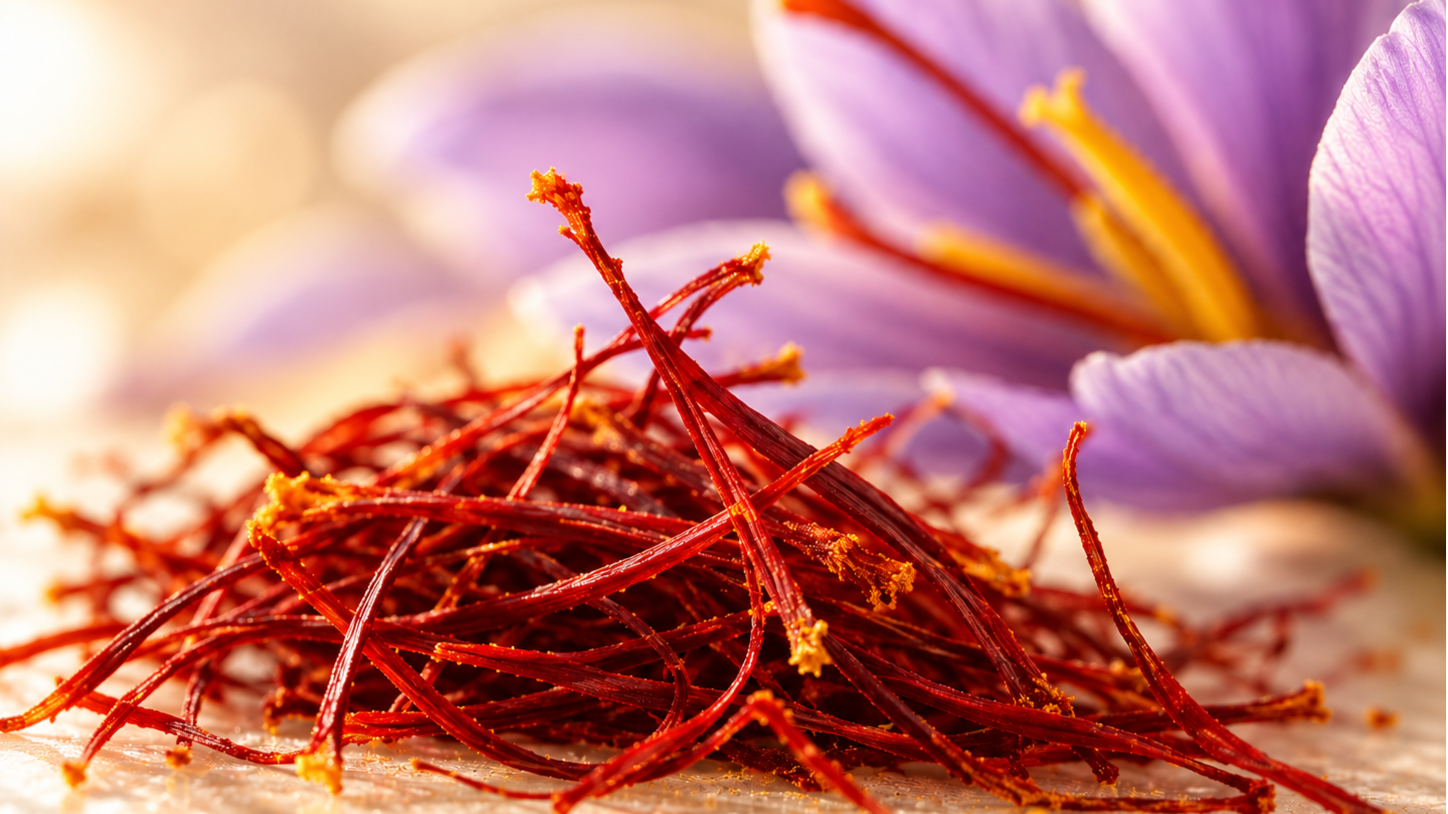
Uneven skin tone and stubborn dark spots send a lot of women searching for answers, and one ingredient keeps surfacing across centuries of skincare tradition: saffron. Long before serums and science labs, saffron was already known as “red gold,” treasured for its ability to bring balance and glow to the skin. Modern research is now confirming what Ayurvedic practitioners have understood for generations, and the story starts with three small but potent compounds hiding inside every saffron thread.
Saffron’s Three Skin-Transforming Compounds
Saffron combines three distinct bioactive compounds, each doing its own job to support clearer, brighter, more balanced-looking skin: crocin, crocetin, and safranal.
Crocin, the pigment that gives saffron its deep red-orange color, helps skin appear brighter, clearer, and more evenly illuminated over time by supporting a refined-looking tone and visible radiance. Crocetin works differently, focusing on helping skin defend itself against the daily environmental stress that speeds up visible fatigue, dullness, and premature aging. Safranal, the compound responsible for saffron’s distinctive aroma, contributes to its uniquely calming effect on both skin and senses, making the experience of using saffron-based products feel like a small ritual in itself. Together, these three compounds explain why saffron has remained one of the most prized beauty ingredients across generations of Ayurvedic rituals.
How Saffron Fades Dark Spots
Dark spots form when melanin production goes into overdrive in certain areas of the skin, often triggered by sun exposure, hormonal shifts, or inflammation. Saffron’s bioactive compounds appear to interrupt this process at more than one point, which is part of why it has held such a lasting place in skin-brightening traditions.
Crocin and Melanin Suppression
Crocin, the carotenoid pigment responsible for saffron’s signature color, has been shown in studies on cultured melanocytes and B16F10 murine melanoma cells to lower melanin levels and reduce tyrosinase activity. Tyrosinase is the enzyme that triggers melanin formation, so when its activity is calmed, the skin has less raw material to build dark spots and patches of uneven tone. This is a meaningful distinction from ingredients that simply mask discoloration on the surface. Crocin works closer to the source, which helps explain why consistent use tends to produce a more even-looking complexion over time rather than a temporary surface effect.
Crocetin’s Defense Against Environmental Stress
Crocetin takes on a different but vital role: helping skin defend itself against oxidative stress caused by daily exposure to UV rays, pollution, and other environmental aggressors. Research has pointed to crocetin’s protective effects against UV-related oxidative stress and cell damage, both of which are known contributors to dullness, fatigue, and the kind of premature aging that makes uneven tone look more pronounced. When environmental stress is kept in check, skin has an easier time maintaining the balanced, radiant appearance that saffron is known for. This protective quality is one reason saffron pairs well with a daily skincare ritual rather than an occasional treatment.
Why Ayurveda Prized Saffron for Centuries
Saffron’s place in skincare did not begin with modern serums. Ayurvedic tradition classifies saffron as a “varnya” herb, meaning it is specifically recognized for promoting skin radiance and luminosity. It has also long been used to help pacify Pitta-related skin concerns, which in Ayurvedic terms often show up as redness, heat, and uneven pigmentation.
Beauty rituals across Persia, India, and the Mediterranean have called on saffron for thousands of years, with historical references tracing its use back to royal baths and ancient beauty concoctions. Saffron’s rarity has always added to its mystique. It remains one of the most labor-intensive spices in the world to harvest, since only three fragile stigmas can be hand-picked from each Crocus sativus flower. That scarcity is part of why saffron carried such weight in traditional Ayurvedic formulations, reserved for rituals meant to nurture rather than rush the skin. This centuries-old reverence is what modern botanical science is now working to explain in molecular detail.
Your Skin’s Timeline on Saffron
Saffron reveals itself in stages rather than all at once, which fits its reputation as a slow, restorative ingredient rather than a quick fix. Understanding what to expect at each stage can help set realistic expectations for anyone starting a saffron-based routine.
Days One Through Seven
The first shift is often visible within days. Skin tends to look fresher, softer, and naturally more radiant almost immediately, even before deeper changes in tone have had time to develop. This early boost in radiance is part of what makes saffron such a satisfying ingredient to introduce into a routine, since the reward for consistency starts showing up quickly.
Week Two: Balance Returns
Around week two of consistent use, skin begins to look more balanced and visibly rested. This is often when the calming effects of safranal and the protective work of crocetin start to show through in a complexion that looks less stressed and more settled. Redness and blotchiness tend to soften during this stage, laying the groundwork for the more dramatic evenness that follows.
Week Four: Visible Evenness
By week four, tone appears more even, texture feels smoother, and the skin carries a quality of light that holds up throughout the day with less effort. This is where crocin’s melanin-suppressing activity tends to become most apparent, translating into a complexion that looks genuinely more uniform rather than simply brighter for a few hours. The cumulative effect is what saffron has always been treasured for: radiance that reads as health, not product. The longer the ritual continues, the more the skin reflects it.
Beyond Brightening: Added Benefits
Tone and dark spots may be the headline benefit, but saffron’s effects extend well beyond pigmentation. Two additional areas where saffron consistently earns its reputation are inflammation and hydration, both of which play a direct role in how even and healthy skin looks day to day.
Calming Redness and Inflammation
Crocin shows the most prominent anti-inflammatory effects among saffron’s compounds, helping reduce redness, irritation, and the visible signs of inflammatory skin conditions, with safranal contributing supporting anti-inflammatory activity as well. This calming quality lines up neatly with Ayurveda’s long-standing use of saffron to pacify Pitta imbalances, which are traditionally associated with heat and redness in the skin. For anyone whose uneven tone is tied to reactive or easily irritated skin, this soothing property can make saffron feel gentler than more aggressive brightening ingredients.
Supporting Hydration and Barrier Strength
Crocetin has been studied for its benefits in improving skin hydration and strengthening the skin’s natural barrier function. A stronger barrier helps prevent excess water loss and supports elasticity, both of which contribute to skin that looks plumper and more resilient. Well-hydrated skin also tends to reflect light more evenly, which reinforces the brightening effects already happening at the pigment level. Hydration and tone-evening work hand in hand rather than as separate goals.
Saffron Delivers Lasting, Natural Radiance
Saffron’s staying power in skincare comes down to a rare combination: centuries of traditional use backed by compounds that modern research is actively confirming. Crocin, crocetin, and safranal each bring something different to the table, from suppressing melanin production to defending against environmental stress to calming skin and senses alike. That layered approach is likely why saffron has outlasted so many passing skincare trends.
For those weighing their options among the best serums for uneven skin tone, saffron-based formulas, such as Maska Organics’ Celestial Saffron Elixir, offer a rare blend of tradition and evidence, working gradually toward results that feel earned rather than artificial. Starting a saffron face serum ritual and sticking with it through the first month tends to be the difference between noticing a fleeting glow and seeing a genuine shift in tone and texture.
Maska Organics LLC
4451 Mill Landing Dr
Harrisburg
NC
28075
United States


