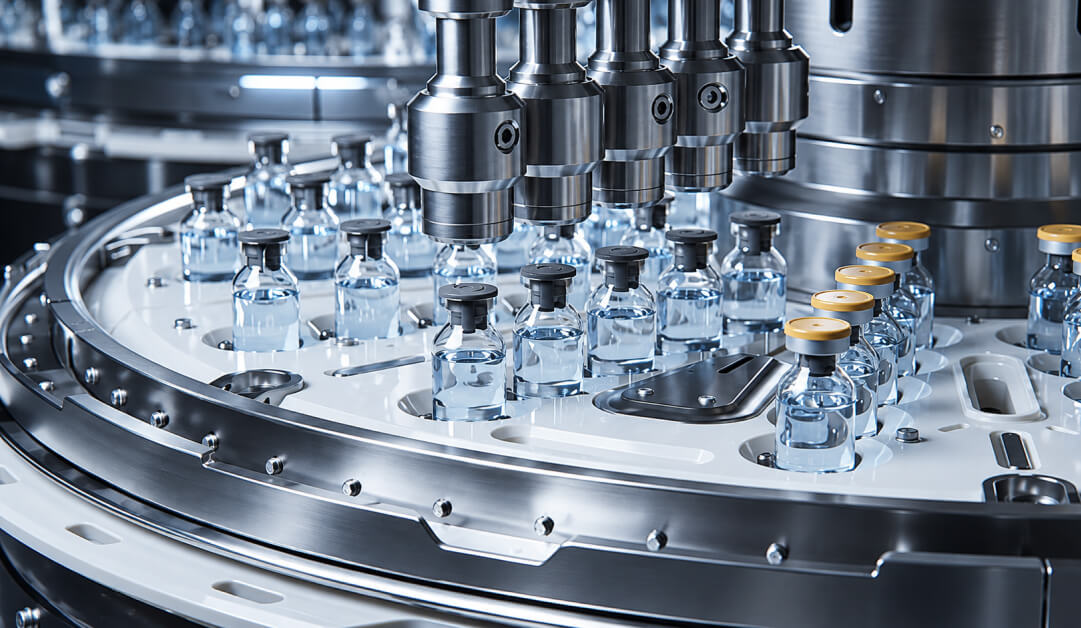
A pharmaceutical visual inspection case study from Dabrico found that an AI-powered automated vial inspection system achieved 98% overall defect-detection accuracy while maintaining a 2.7% false reject rate, demonstrating how automation can outperform traditional human-dependent inspection for difficult pharmaceutical products.
BOURBONNAIS, Ill. – A new case study from pharmaceutical inspection technology company Dabrico is providing fresh evidence that automated vial inspection can deliver greater consistency and, for certain difficult-to-inspect products, better inspection performance than traditional manual or semi-automated processes.
The study examined a contract manufacturing organization that was experiencing inspection challenges with powder-filled molded glass vials. After evaluating an AI-powered automated inspection approach, the organization tested Dabrico’s DAI-50 automated visual inspection system. The system achieved 98% overall defect-detection accuracy across the tested defect types while maintaining a false reject rate of 2.7%. The results were equal to or better than the performance of human inspectors.
The findings add to a broader shift in pharmaceutical quality control toward automated vial inspection, particularly for products where natural variations in glass, powders, liquids or product appearance make consistent human inspection difficult.
Case Study Puts Automated Vial Inspection to the Test
Manual visual inspection has remained an important part of pharmaceutical quality control because trained inspectors can adapt to subtle differences between products. That flexibility, however, comes with limitations.
Human inspection performance can vary between operators and over time, while fatigue and attention drift can affect consistency. Manual inspection also limits throughput, with Dabrico reporting that manual processes typically do not exceed approximately 20 units per minute under optimal conditions.
The CMO featured in the case study faced an additional challenge: the product itself naturally varied in appearance.
Its powder-filled molded glass vials could exhibit acceptable differences in powder movement, powder adhesion, fill levels and glass characteristics. Those variations made it difficult for conventional inspection approaches to distinguish between normal product characteristics and actual defects.
Rather than programming the automated system around a large library of known defects, the DAI-50 used an unsupervised machine-learning approach. Approximately 500 pre-inspected compliant units were used to teach the system what acceptable product variation looked like before it was challenged with units it had not previously inspected.
Automated Inspection Achieved 98% Overall Defect Detection
Once the inspection recipe had been created, the CMO provided a customer-defined defect set along with compliant holdback vials that had not been used during training.
The DAI-50 achieved 98% overall defect-detection accuracy while maintaining a 2.7% false reject rate. According to Dabrico, the results demonstrated performance equal to or better than human inspection across the evaluated defect types. The CMO subsequently used the results to support funding for implementation of the system.
That combination of detection performance and a relatively low false reject rate is important because pharmaceutical inspection is not simply about rejecting more units.
An inspection process must identify actual defects while recognizing the natural differences that occur among acceptable products. A system that is overly sensitive may improve apparent detection rates while unnecessarily removing compliant product from production.
Why Automation Can Improve Inspection Consistency
One of the fundamental differences between manual and automated visual inspection is repeatability.
A trained human inspector can adapt quickly to unusual products and previously unseen conditions, but inspection performance is inherently dependent on the individual performing the work. Automated systems can apply the same inspection process and acceptance criteria to every unit.
The DAI-50 combines controlled product handling, 360-degree rotation and multiple high-resolution cameras to collect images from different areas of the vial. Its AVIS inspection technology then evaluates those images against a model of normal product variation. The platform is designed to identify both known defects and anomalies that were not explicitly included in a predefined defect library.
This approach is particularly relevant for molded glass vials, lyophilized products, powders, suspensions and other products where compliant units do not always look identical.
According to Dabrico, the system can operate at speeds of up to 90 units per minute. By comparison, the company says manual vial inspection generally remains below approximately 20 units per minute, while the DAI-50 can operate at more than three times the speed of semi-automated inspection systems.
The significance of the case study, however, is not simply that automation can inspect faster.
It demonstrates that manufacturers may not necessarily have to choose between inspection speed and the adaptability traditionally associated with skilled human inspectors.
AI Is Changing the Role of Automated Visual Inspection
Traditional machine-vision systems generally rely on rules, thresholds or examples of known defects. That approach works well when products are highly uniform, but it becomes more difficult when acceptable units contain significant visual variation.
Dabrico’s DAI-50 takes a different approach by learning the characteristics of compliant products first. The AVIS platform models normal variation and then identifies observations that fall outside that learned range. Dabrico says this allows the system to address difficult inspection applications without requiring thousands of labeled examples of every possible defect.
The case study illustrates how that distinction can translate into measurable production results.
For the powder-filled molded glass vial evaluated by the CMO, automated inspection did not simply reproduce the existing inspection process at a higher speed. The system demonstrated that automation could match or exceed human inspection performance while applying the inspection criteria consistently from unit to unit.
That does not mean manual visual inspection is becoming unnecessary. Dabrico itself continues to provide manual and semi-automated inspection technologies and notes that manual inspection remains particularly useful for lower-volume and difficult-to-automate products.
Instead, the findings suggest that the boundary between products requiring human inspection and those suitable for automation may be changing as AI-based inspection technology becomes more adaptable.
For pharmaceutical manufacturers evaluating whether difficult vial products can be automated, the case study provides a practical example of what modern automated vial inspection can achieve when inspection technology is trained around the actual variability of the product.
Manufacturers can learn more about AI-powered vial inspection and the DAI-50 at automatedvialinspection.com.
About AutomatedVialInspection.com
AutomatedVialInspection.com focuses on automated vial inspection for pharmaceutical manufacturing and quality control applications. The website provides information for organizations evaluating how automated inspection technology can fit into modern vial inspection processes and broader pharmaceutical quality programs.
Contact Information
Contact: Pepe Davila
Company Name: AutomatedVialInspection.com
Address: 1555 Commerce Dr, Bourbonnais, IL 60914
Email: info@autoamtedvialinspection.com
Media gallery