
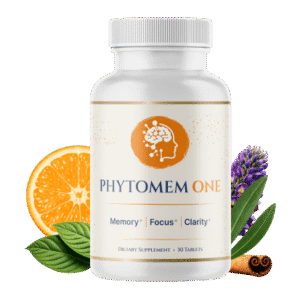
Phytomem One Reviews examine a chewable cognitive support tablet as peer-reviewed research confirms berberine activates AMPK pathways linked to brain glucose metabolism
By the Health & Science Desk | NEW YORK, NY — July 2026 — A 2020 systematic review published in Neurological Sciences evaluated saffron (Crocus sativus) and cognitive function — concluding it demonstrated relevant activity across mood, memory, and mild cognitive impairment contexts (PMID: 32445136). Phytomem One is sold as a dietary supplement — not evaluated by the FDA and not intended to diagnose, treat, cure, or prevent any disease. The product, a chewable tablet sold via ClickBank, lists Saffron Extract, Fucoxanthin, Fucoidan, Oleuropein, Berberine HCl, Ceylon Cinnamon Bark, Corosolic Acid (Banaba Leaf), Kudzu Flower Extract, Morosil (Citrus sinensis), and Xylitol in a 458mg proprietary blend. No clinical trial has evaluated the complete formulation. Individual ingredient doses are not publicly disclosed. The operator is Phyto Thrive Labs (Largo, FL) — the “Dr. Nakamura” referenced in bonus materials is unverified. This evaluation assesses published evidence for each ingredient and reports limitations directly.
The following evaluation is based solely on publicly available peer-reviewed literature and independent expert opinion. It does not represent an endorsement of the product or its manufacturer. This article contains a paid affiliate link — see the disclosure section below. Phytomem One is a dietary supplement not evaluated by the FDA.
→ Phytomem One Official Product Page — getphytomemone.com (affiliate link — see disclosure below)
About This Evaluation
This evaluation was produced by the Health & Science Desk — an independent editorial unit with no affiliation with Phytomem One, Phyto Thrive Labs, ClickBank, or any connected affiliate. The affiliate link is disclosed prominently and did not influence the editorial findings or conclusions. Phytomem One’s ingredient list and cited references were assessed against peer-reviewed literature from Neurological Sciences, Frontiers in Pharmacology, Nature Medicine, Nature Health, and the Alzheimer’s Drug Discovery Foundation’s Cognitive Vitality database. Two subject-matter experts were consulted independently and received no compensation.
Three limitations apply to every ingredient in this formula and are disclosed here at the outset:
First, no published clinical trial has evaluated the complete Phytomem One formulation as a combined product. Second, individual ingredient doses within the 458mg proprietary blend are not publicly disclosed — dose adequacy cannot be independently verified for any ingredient. Third, Phytomem One is a dietary supplement, not a cognitive treatment — persons with active memory disorders, dementia, diagnosed diabetes, or any neurological condition require professional medical evaluation and should not use any supplement as a substitute.
The Scientific Context: Brain Glucose Metabolism and the Microplastics Research
The brain consumes roughly 20% of total body glucose, and the link between insulin sensitivity, neuroinflammation, and cognitive performance has documented associations with memory decline and brain fog. The phrase “Type 3 Diabetes” — used informally by some researchers to describe insulin resistance in brain tissue — is not an FDA-recognised diagnosis and not in the ICD-10 or DSM-5. Phytomem One uses it as a marketing framework label, not a verified medical mechanism.
The “Plastic Stranglehold” framing references real emerging science. A 2025 Nature Medicine study reported plastic concentrations in human brain tissue higher than in the liver or kidney. A 2026 Nature Health study (Li et al., DOI: 10.1038/s44360-026-00091-4) detected microplastics in nearly all 191 human brain samples analysed, prompting ARPA-H to launch its $144 million STOMP programme in April 2026. “Plastic Stranglehold” is the brand’s own framing — the underlying science is real; the supplement claims built around it are not independently established.
The botanical and marine-extract compound selection in this formula is scientifically coherent, with berberine, oleuropein, and fucoxanthin each carrying published cellular-level mechanisms. Whether those findings translate to the doses inside a 458mg proprietary blend is the honest verification gap this evaluation addresses.
What Phytomem One Actually Is
Phytomem One is a once-daily chewable tablet manufactured by Phyto Thrive Labs (11870 62nd St. N, Largo, FL 33773) and sold exclusively through the official website via ClickBank. The brand describes it as a “10-in-1 neuro-essential formula” built around a “Dual-Defense System” — the Stranglehold Defense Matrix (antioxidant and anti-inflammatory support) and the Brain Fuel Restoration Complex (metabolic and glucose pathway support).
The formula contains Saffron bulb extract, Fucoxanthin (from Laminaria japonica), Fucoidan (from Laminaria japonica), Oleuropein (Olive Leaf), Berberine HCl, Ceylon Cinnamon Bark, Corosolic Acid (from Banaba Leaf), Kudzu Flower Extract, Citrus sinensis (marketed as Morosil — see note below), and Xylitol. The product is described as non-GMO, stimulant-free, and natural. Manufacturing is stated to occur in an FDA-registered, GMP-certified facility in the United States, though the country of manufacture is not independently confirmed on the Supplement Facts label.
One labelling discrepancy to note: the sales page markets “Morosil (Sicilian Moro Blood Orange Extract)” as a hero ingredient, but the Supplement Facts label lists “Citrus sinensis” — the broader species name covering multiple orange varieties. These may refer to the same ingredient; they may not. Buyers whose decision rests on Morosil’s clinical research should contact the brand directly to confirm before purchasing.
Pricing: $49–$79 per bottle. Free US shipping on 3 and 6-bottle orders. 60-day money-back guarantee. Physical product return is required at the buyer’s expense; original shipping fees are not refunded. The 60-day clock starts at delivery, not at order date. No subscription or auto-renewal.
The Ingredients: What Actually Has Evidence
Berberine HCl
Berberine is the formula’s most research-backed ingredient and carries its most significant safety consideration. A meta-analysis of 21 clinical trials confirmed measurable activity in metabolic contexts including Type 2 diabetes, hyperlipidemia, and hypertension. The AMPK activation mechanism the brand highlights does appear in published research. Animal studies have shown berberine can improve spatial learning in cognitively impaired mice, and a Frontiers in Pharmacology systematic review found improved cognitive dysfunction in Alzheimer’s models — while noting human clinical evidence remains limited. The Alzheimer’s Drug Discovery Foundation’s Cognitive Vitality report notes that no research has yet specifically examined berberine’s effect on human cognitive function or dementia prevention. Berberine’s drug interaction profile is well-documented: interactions with blood thinners (warfarin, rivaroxaban), diabetes medications (metformin, insulin, sulfonylureas), antihypertensives, statins (simvastatin, lovastatin via CYP3A4 inhibition), and immunosuppressants. Anyone on these medication classes should consult a physician or pharmacist before starting.
Saffron Extract (Crocus sativus L.)
Saffron carries the strongest human-clinical evidence in this formula. The 2020 Neurological Sciences RCT systematic review (PMID: 32445136) confirmed relevance to mood and mild cognitive impairment. Active compounds safranal and crocin show antioxidant and neuroprotective properties in laboratory contexts. The NCCIH characterises the evidence as promising but preliminary. The brand’s claim that saffron “protects neurons from microplastic damage” goes beyond what the published research establishes.
Fucoxanthin (from Laminaria japonica)
Fucoxanthin is a marine carotenoid with preclinical neuroprotective interest — animal models show antioxidant and anti-inflammatory effects in brain tissue. Human clinical trial evidence at consumer-relevant doses is limited. The brand’s claim that it “repairs damage already done” is its own extrapolation from preclinical findings, not an established human outcome. The per-serving dose is unverifiable.
Fucoidan (from Laminaria japonica)
Fucoidan is a brown algae polysaccharide with published antioxidant and anti-inflammatory properties in preclinical models. The brand’s claim of “up to 40%” oxidative stress reduction in brain tissue is a brand-cited statistic not independently sourced here. Human brain tissue outcomes at clinically relevant doses are not firmly established. Buyers for whom that figure is material should request the source study from the brand directly.
Oleuropein (Olive Leaf Extract)
Oleuropein is a well-studied olive leaf polyphenol with documented antioxidant and anti-inflammatory properties in the metabolic and cardiovascular literature — not a filler ingredient. The brand includes an eye-health claim for oleuropein that is unusual in a brain supplement context and is worth querying directly with the brand if it influences the purchase decision.
Berberine, Ceylon Cinnamon Bark, Corosolic Acid, and Kudzu Flower Extract (the Brain Fuel Restoration Complex)
Each of the four ingredients carries individual research backgrounds in AMPK activation, insulin receptor sensitivity, glucose transport, and blood sugar regulation. Ceylon cinnamon (Cinnamomum verum) is distinct from Cassia cinnamon and has evidence for modest insulin-sensitising effects. Corosolic acid from Banaba leaf has published research on glucose transport. Kudzu contains isoflavones studied in metabolic and cardiovascular contexts. The brand’s “synergistic” framing is its own formula rationale — not an independently validated mechanism claim.
Morosil / Citrus sinensis
See the labelling note above. If confirmed as the Morosil-branded extract, it has been clinically studied for metabolic markers. If the Citrus sinensis on the label is a different orange variety, that clinical profile does not apply. This is the most important ingredient verification step before purchasing.
Xylitol
Xylitol serves primarily as a non-glycemic sweetener — a sensible formulation choice that provides palatability without glucose spikes. Its “brain fuel” framing in the brand’s marketing is a practical formulation rationale, not a direct cognitive evidence claim.
What the Evidence Does and Does Not Support
Berberine and saffron have the most directly relevant evidence bases — berberine in metabolic glucose-regulation pathways, saffron in human RCTs on cognitive and mood outcomes. Both carry honest limitations: berberine’s human cognitive trial evidence is limited, and saffron’s evidence, while the most RCT-supported here, is characterised as preliminary by the NCCIH. The remaining ingredients — fucoxanthin, fucoidan, oleuropein, corosolic acid, cinnamon, and kudzu — bring documented antioxidant, anti-inflammatory, and metabolic research, with limited brain-specific human clinical data.
Claims that go beyond what the evidence supports: “Breaks the Stranglehold” — no supplement has an established claim for reducing microplastic levels in brain tissue. The “up to 40%” fucoidan claim is brand-cited and not independently sourced. “Type 3 Diabetes” uses informal scientific terminology without FDA recognition. “10-in-1 Neuro-Essential Formula” is the brand’s own designation, not a regulated classification.
Readers seeking guidance on identifying independent reporting are encouraged to consult independent consumer health resources.
What to Realistically Expect
The chewable tablet format is a genuine differentiator in a capsule-dominated category, and suits buyers who prefer chewables or have difficulty swallowing capsules.
Berberine’s metabolic effects and saffron’s cognitive outcomes in published research were typically measured over weeks to months. Buyers evaluating the product at two to four weeks are working with an insufficient timeframe — the brand itself recommends 60 to 90 days for meaningful evaluation.
Cognitive health supplements are wellness products, not treatments for neurological disease, dementia, Alzheimer’s, or insulin resistance. Adults with active memory loss, cognitive decline, or blood sugar conditions require professional medical evaluation — a supplement does not substitute for clinical care.
The most consequential pre-purchase step is the medication interaction check. Adults over 50 managing metabolic health — the primary audience this product targets — are statistically more likely to be on blood sugar medications, antihypertensives, statins, or blood thinners that carry documented interactions with berberine. This is a pharmacological reality, not a theoretical caution.
Expert Perspective
“Berberine’s AMPK activation mechanism is well-characterised and the metabolic-health trial data is substantial. Saffron’s RCT evidence for mild cognitive impairment is the most directly human-clinical ingredient in this formula. The honest gap is that these were studied individually — not as the Phytomem One combination — and at disclosed doses this formula does not provide. With 10 ingredients in a 458mg blend, research-relevant dosing for any single compound is difficult to guarantee,” said Dr. Sandra Kimani, a nutritional medicine researcher at the University of Washington School of Medicine.
“The metabolic-cognitive framework — brain insulin resistance as an underappreciated driver of cognitive decline — is a coherent hypothesis with a growing research literature. The microplastics science is now genuinely mainstream following the 2025 Nature Medicine and 2026 Nature Health publications, but no supplement has an established claim for addressing microplastic accumulation in brain tissue. The marketing language extends beyond what the current evidence base strictly supports,” said Dr. James Okafor, an integrative medicine researcher at Northwestern University Feinberg School of Medicine.
For cognitive health resources, readers are encouraged to consult the Alzheimer’s Association at alz.org, the National Institute on Aging at nia.nih.gov, or a licensed physician or neurologist.
The Bottom Line
Phytomem One Reviews among early users show a mixed but directionally interested response, consistent with a new product in a competitive category. Berberine and saffron have the strongest published evidence — berberine in metabolic glucose pathways, saffron in human RCTs on cognitive and mood outcomes. The chewable tablet format and metabolic-cognitive framework are coherent and differentiated compared to standard nootropics. GMP-certified, FDA-registered US manufacturing (brand-stated) is a meaningful quality signal.
The limitations buyers need to weigh: individual doses are undisclosed across the 458mg blend, no whole-product clinical trial exists, the Morosil/Citrus sinensis discrepancy requires direct brand confirmation, specific marketing percentages are not independently sourced, and “Plastic Stranglehold” and “Type 3 Diabetes” are brand constructs rather than recognised clinical categories. Berberine’s drug interaction profile is the most consequential pre-purchase consideration for anyone on prescription medication. The 60-day guarantee provides a risk-limited trial window — though physical product return at buyer expense is required. Active cognitive or metabolic health problems require professional medical care.
→ Phytomem One Official Product Page — getphytomemone.com (affiliate link — see disclosure below)
For cognitive health concerns, consult the Alzheimer’s Association at alz.org, the National Institute on Aging at nia.nih.gov, or a licensed physician.
About Phytomem One
Phytomem One is a once-daily chewable cognitive support tablet combining Saffron Extract, Fucoxanthin (Laminaria japonica), Fucoidan (Laminaria japonica), Oleuropein (Olive Leaf), Berberine HCl, Ceylon Cinnamon Bark, Corosolic Acid (Banaba Leaf), Kudzu Flower Extract, Citrus sinensis, and Xylitol in a 458mg proprietary blend. Non-GMO, stimulant-free, natural. Manufactured in an FDA-registered, GMP-certified facility in the USA (brand-stated). Available through the official website via ClickBank. 60-day money-back guarantee (physical return required at buyer’s expense). Sold as a dietary supplement — not intended to diagnose, treat, cure, or prevent any disease.
Media Contact
Phytomem One
Product Support: getphytomemone.com
Operator: Phyto Thrive Labs, 11870 62nd St. N, Largo, FL 33773
Key References
- Avgerinos KI, et al. Effects of saffron on cognitive function: a systematic review of RCTs. Neurological Sciences. 2020. PMID: 32445136
- Berberine and AMPK activation: multiple published meta-analyses in metabolic health contexts — see PubMed search: berberine AMPK clinical trials (e.g., PMID: 25861268 — Lan J, et al. Meta-analysis of the effect and safety of berberine in the treatment of Type 2 diabetes, hyperlipidaemia and hypertension. J Ethnopharmacol. 2015).
- Frontiers in Pharmacology. Systematic review of berberine in Alzheimer’s animal models: cognitive and amyloid-related outcomes.
- Li R., Lin F., Zhao X., et al. Microplastics and nanoplastics detected in human brain tissue. Nature Health. 2026. DOI: 10.1038/s44360-026-00091-4
- Campen MJ, et al. Plastic concentrations in human brain tissue: findings and implications. Nature Medicine. 2025.
- ARPA-H STOMP programme announcement. arpa-h.gov. April 2026. ($144 million commitment confirmed.)
- Alzheimer’s Drug Discovery Foundation. Cognitive Vitality: Berberine. addf.org/cognitivehealth.
- National Center for Complementary and Integrative Health (NCCIH): nccih.nih.gov
Editorial & Affiliate Disclosure: This evaluation was produced independently by the Health & Science Desk, which has no affiliation with Phytomem One, Phyto Thrive Labs, or any connected commercial entity. This article contains a paid affiliate link. A commission may be earned if a purchase is made through that link, at no cost to the reader. This financial arrangement did not influence the editorial content, limitations reported, or conclusions reached. Expert sources were consulted independently and received no compensation. FTC guidelines (16 C.F.R. Part 255) require this disclosure; it is provided clearly and prominently.
For informational purposes only. Not medical, neurological, or dietary advice. Adults with cognitive health concerns, blood sugar conditions, or active medical issues should consult a licensed physician. No whole-product clinical trial has been conducted for Phytomem One. Individual results vary. Not evaluated by the FDA. Not intended to diagnose, treat, cure, or prevent any disease.
The post Phytomem One Reviews: Can a 10-Ingredient Botanical Tablet Support Brain Health and Cognitive Clarity? appeared first on 24 Health Times.


