
CHARLOTTE, NC – X-Sense highlights the growing need for whole-home protection as fire behavior in modern households becomes increasingly unpredictable.
Smoke alarms are usually the first device people think about when it comes to home fire safety. They are common and often provide the earliest indication of a fire, but they are not suitable for every area of a house.
In some situations a heat detector offers better protection, because it responds to rising temperature rather than smoke particles. Understanding the difference helps homeowners choose the right device for each space.
What Is a Smoke Detector?
Smoke detectors are designed to sense the smoke particles generated by a fire. Smoke enters the sensing chamber, which activates the alarm and warns occupants early.
Bedrooms, hallways, and living areas are good places for smoke alarms, since earlier awareness of a fire improves the chance of a safe escape. They are particularly helpful for smoky, smoldering fires that develop before any sharp temperature change.
Smoke detectors may not be appropriate for areas with heavy dust, steam, or cooking fumes, as these conditions can cause false alarms.
What Is a Heat Detector?
A heat detector does not sense smoke. It monitors temperature and activates when the temperature exceeds a set threshold or rises at an unusually fast rate.
Heat detectors are intended for places where smoke detectors would struggle, whether because of normal household activity or environmental conditions such as dust, humidity, or fumes.
When Is a Heat Detector a Better Choice?
1. Kitchens
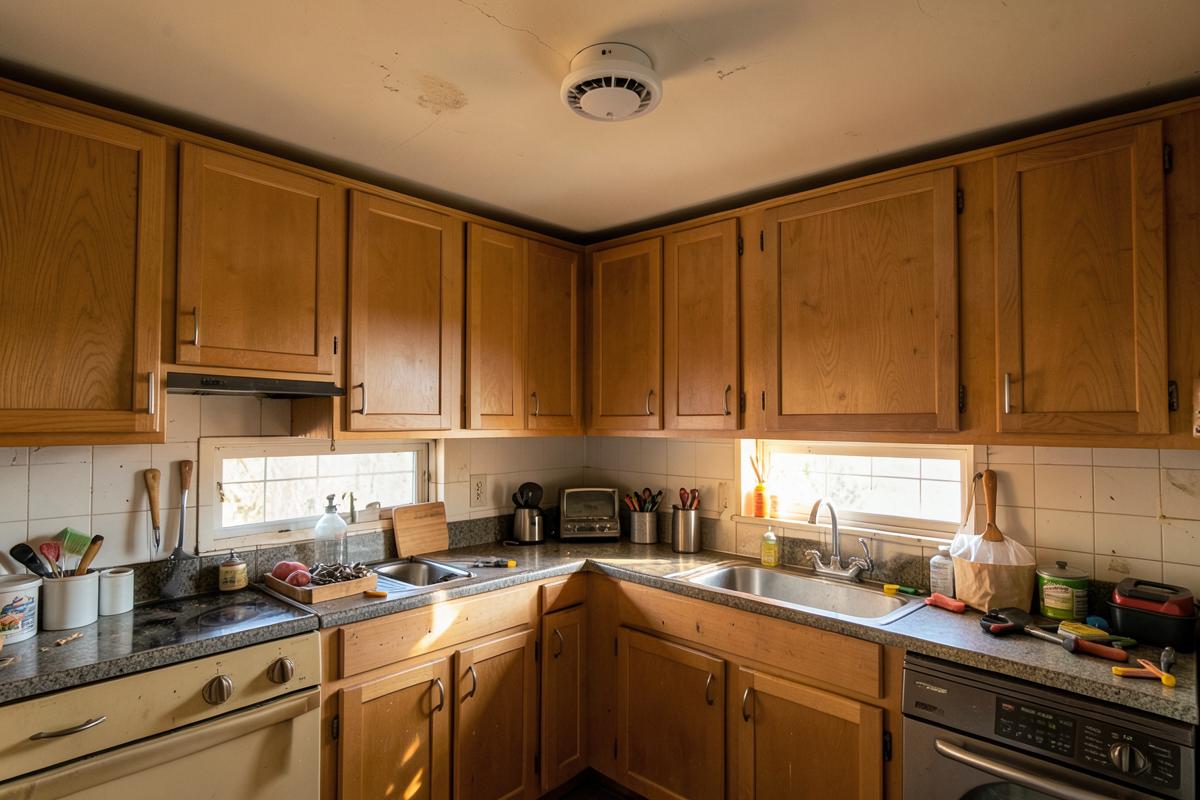
Kitchens are where homeowners are most likely to experience false alarms. Everyday cooking fumes, steam, or particles can set off conventional smoke alarms. In some kitchens a heat detector is more appropriate, since it responds to excessive temperature rather than normal cooking.
2. Garages
Garages commonly contain dust and fumes from vehicles, tools, chemicals, and equipment, and those conditions can affect smoke detector performance. A heat detector adds a layer of protection by responding to hazardous temperature rises without reacting to typical garage activity.
3. Workshops and Utility Rooms
Workshops and utility areas often include machinery and dust that make smoke detection difficult. A heat detector can help identify fire risks in these spaces while avoiding needless false alarms.
4. Areas with Dust or Humidity
Attics, storage rooms, and some utility spaces may not offer optimal conditions for smoke detection. Heat detection can be a good option in such cases, since it relies on temperature change rather than airborne particles.
Heat Detector vs. Smoke Detector: Which One Should You Choose?
The right choice depends on the type of risk and the conditions present in each location.
Smoke detectors typically work best in living and sleeping areas, where they can warn residents in the widest range of fire scenarios. Heat detectors are frequently the better choice in spaces where a smoke detector would trigger nuisance alarms or where conditions interfere with smoke detection.
Rather than choosing one or the other, many homes benefit from combining both technologies in the appropriate spots.
Benefits of Modern Heat Detectors
Modern heat detectors have become more advanced, offering improved reliability and easier installation. Some smart models provide additional features that help homeowners monitor safety conditions more effectively.
For homeowners looking for reliable home safety solutions, X-SENSE develops smart safety devices designed for residential environments, including fire and environmental monitoring products.
The X-SENSE XH02-M heat detector is designed to provide temperature-based fire protection with a long-lasting battery solution. It is suitable for areas where traditional smoke detection may not always be the ideal choice.
Where Should Heat Detectors Be Installed?
Locations commonly considered for heat detectors include:
- Kitchens
- Garages
- Attics
- Storage rooms
- Workshops
- Utility areas
Every installation decision should follow safety recommendations and manufacturer instructions to make sure the device functions properly.
Maintenance Tips for Heat and Smoke Detectors
Whatever kind of detector is installed, maintenance is key. Homeowners should:
- Test alarms according to the manufacturer’s instructions
- Keep devices free of dust
- Change batteries as necessary
- Replace older units based on their expected service life
- Review household emergency plans regularly
A well-maintained safety device is far more likely to perform when protection is most needed.
Final Thoughts
Smoke and heat detectors serve different functions and should not be treated as substitutes for one another. Smoke detectors work well in living areas, while heat detectors provide early warning where smoke alarms are not suited to the environment.
Using the right detector in each part of the house creates a more complete fire protection plan. Knowing the difference between these technologies helps homeowners make informed decisions and improve their overall protection.
About X-SENSE Innovations
Founded in 2013, X-SENSE Innovations operates from its registered U.S. address at X-SENSE USA LLC, 1209 Orange St, Wilmington, DE 19801, and specializes in developing certified home fire and safety solutions for both residential and commercial environments. The company focuses on producing professional and user-friendly safety devices, including domestic fire alarms such as smoke, carbon monoxide, and heat alarms, as well as smart home safety systems covering fire protection, intrusion detection, and indoor environment monitoring.
More information is available at www.x-sense.com.
Official company social media profiles: Facebook and Instagram.
Media Detail
Contact Person Name: Farrukh
Company Name: X-Sense
Email: service@x-sense.com
Website: https://www.x-sense.com/
Phone: +1 (833) 952-1880


