
Key Takeaways
- Traditional SEO focuses on clicks while LLM Seeding targets AI citations — creating visibility in AI-generated responses without requiring website visits
- Structured content formats like FAQs, comparison tables, and numbered lists significantly increase citation rates compared to paragraph-based content, with FAQ sections showing particularly strong performance
- Multi-platform distribution significantly outperforms website-only publishing for AI citation success, with third-party authority sites providing better visibility
- Content optimized for AI citations typically shows measurable results within 60-90 days, creating a competitive advantage for early adopters
- Success requires new metrics beyond traditional analytics — tracking brand mentions in AI responses and downstream branded search volume growth
Content strategists face a critical challenge: their best work remains invisible to the AI systems that increasingly shape information discovery. While traditional SEO strategies continue to drive website traffic, a parallel content economy has emerged where visibility comes through citations in AI-generated responses rather than search rankings.
Why Your Best Content Stays Invisible to AI
Your meticulously researched content might rank on Google’s first page, yet remain completely absent from ChatGPT, Claude, or Gemini responses. This growing blind spot creates a significant disconnect as millions of users now begin their information journey through AI assistants rather than traditional search engines.
The problem isn’t content quality — it’s format and distribution. AI models don’t browse the internet like search crawlers. They require content structured in ways that enable easy extraction, understanding, and citation. Dense paragraphs without clear hierarchy, unstructured data presentations, and single-platform publishing strategies create barriers that prevent even exceptional insights from reaching AI training datasets.
This invisibility costs brands countless opportunities for awareness and consideration. When potential customers ask AI systems about industry solutions, product comparisons, or expert recommendations, absent brands miss critical moments in the customer journey. The solution requires a fundamental shift from optimizing for clicks to optimizing for citations.
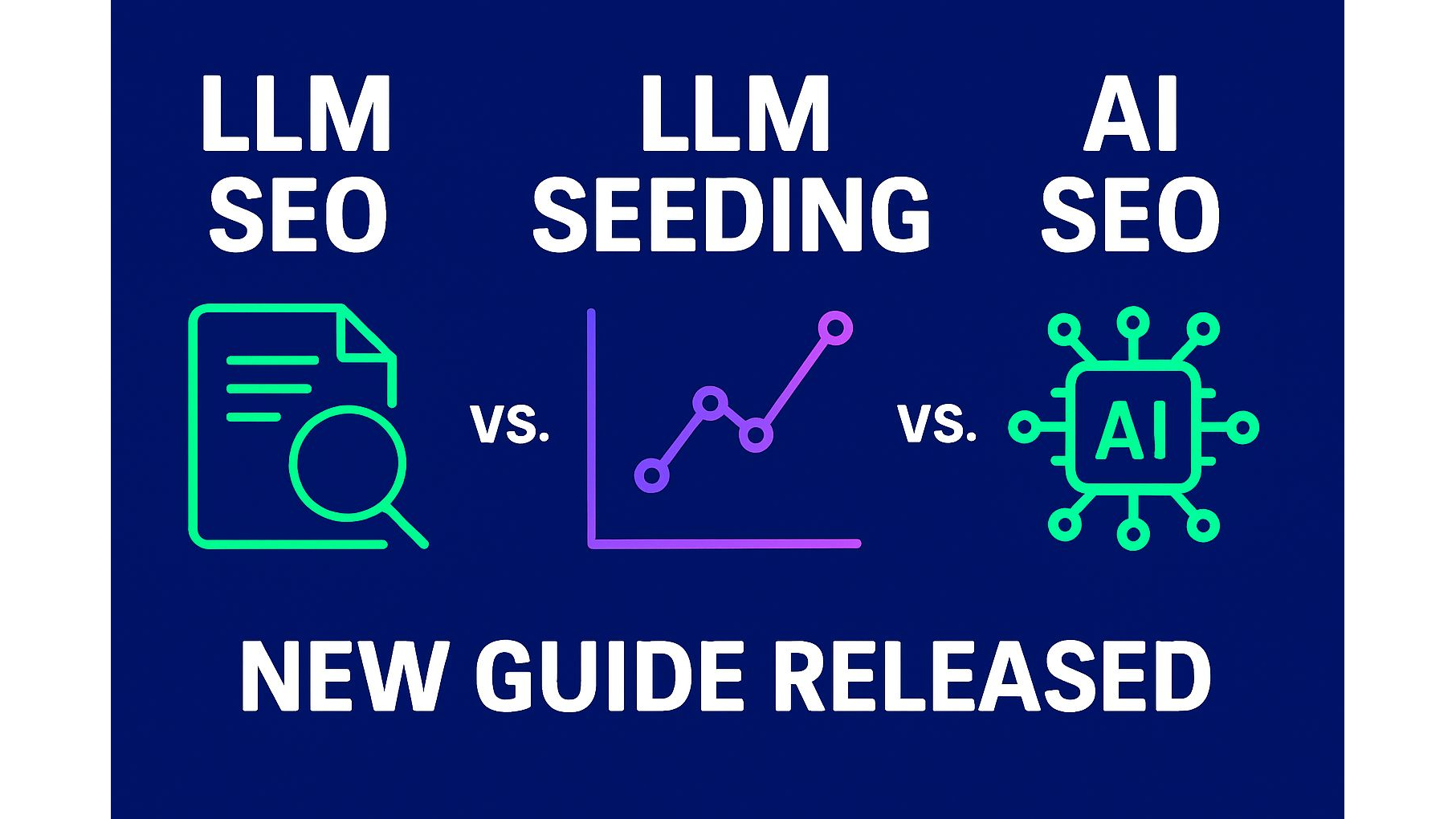
The Critical Differences: LLM SEO, AI SEO, and LLM Seeding
Understanding the distinctions between these three approaches is crucial for developing an effective content strategy that addresses both traditional search visibility and emerging AI citation opportunities.
1. Traditional SEO: Click-Based Visibility
Traditional SEO operates on a click-based economy where success is measured by search rankings, organic traffic, and website visits. The strategy focuses on keyword optimization, backlink acquisition, and technical site performance to drive users from search results to your website. Content is optimized for search algorithms that prioritize relevance signals, domain authority, and user engagement metrics.
While traditional SEO remains important for capturing intent-driven traffic, it doesn’t address the growing segment of users who receive complete answers through AI interfaces without ever clicking through to source websites. This limitation has created a visibility gap that traditional SEO metrics can’t capture or address.
2. AI SEO: Search Engine AI Integration
AI SEO represents an evolution of traditional search optimization, focusing on how search engines like Google integrate AI features into their results pages. This includes optimization for featured snippets, Google’s AI Overviews, and other AI-enhanced search features that provide direct answers within search results.
AI SEO strategies emphasize structured data markup, clear answer formatting, and content that directly addresses specific user queries. While this approach captures some AI-mediated visibility, it remains tied to search engine platforms and doesn’t address standalone AI assistants or conversational AI interfaces where users increasingly seek information.
3. LLM Seeding: Citation-First Strategy
LLM Seeding represents a fundamental paradigm shift toward a citation-based economy. LLM SEEDING™ Network has pioneered this approach, which focuses on creating and distributing content specifically designed to be referenced and cited by large language models in their generated responses.
Unlike traditional SEO’s emphasis on driving traffic, LLM Seeding prioritizes brand exposure through mentions in AI responses, regardless of whether users click through to source websites. This strategy recognizes that AI citations can drive brand awareness, establish authority, and generate qualified traffic through indirect pathways like branded search increases and direct navigation.
4 Content Formats Highly Favored for AI Citations
Large language models demonstrate clear preferences for specific content structures that enable efficient information extraction and attribution. Understanding these preferences allows content strategists to optimize their work for maximum citation potential across major AI platforms.
1. Structured Data Tables and Comparisons
AI models excel at processing and citing organized data tables that present information in clear, comparable relationships. Effective tables include descriptive headers, consistent data formatting, and standardized metrics that enable quick pattern recognition. Comparison tables that evaluate products, features, or methodologies receive significantly higher citation rates than equivalent information presented in paragraph form.
The key to creating citation-worthy tables lies in standardization. Use consistent units of measurement, identical formatting across rows, and clear categorization that allows AI systems to understand relationships between data points. Tables containing quantitative data, specific metrics, and comparative analysis are cited more frequently than qualitative descriptions alone.
2. FAQ Sections with Specific Question-Answer Pairs
FAQ sections mirror the question-answer format that AI models are designed to replicate, creating natural semantic connections between user queries and your content. Research indicates that FAQ sections with distinct question-answer pairs achieve substantially higher citation rates compared to the same information presented in traditional paragraph format.
Effective FAQ optimization requires using natural language questions that reflect actual user inquiries rather than keyword-stuffed variations. Answers should be thorough yet concise — typically 50-150 words — providing complete information without unnecessary elaboration. Include specific facts, numbers, and unique insights to differentiate your FAQ responses from generic alternatives found across the internet.
3. Numbered Lists with Clear Hierarchies
Numbered and bulleted lists provide discrete, easily referenced information chunks that AI models can extract and cite with precision. Lists offer clear hierarchical structure with definitive start and end points, reducing the risk of incomplete information extraction that can occur with paragraph-based content.
Optimize lists by maintaining consistent formatting throughout, beginning each point with a bold headline followed by supporting details. Keep list items roughly equivalent in length and depth to facilitate AI processing. Lists that prioritize, categorize, or rank items (such as “5 Most Effective Strategies” or “3 Types of Solutions”) perform exceptionally well because they provide both organization and built-in prioritization frameworks.
4. Expert Quotes and Detailed Reviews
AI models are programmed to incorporate diverse perspectives, making properly attributed expert quotes highly valuable for citation purposes. These quotes provide clearly marked opinion statements that AI systems can present as authoritative viewpoints rather than objective facts, giving models reliable ways to present complex perspectives while maintaining proper attribution.
Maximize quote citation potential by clearly identifying speakers, their qualifications, and their relevance to the topic. Use standard formatting conventions like quotation marks or blockquote styling to ensure clear delineation. Expert quotes from recognized authorities in specialized fields receive significantly more citations than generic statements or unattributed opinions.
Platform Strategy: Where AI Models Find Content
Platform selection dramatically impacts citation potential, often outweighing content quality in determining AI visibility. AI models don’t crawl the internet uniformly — they prioritize specific platforms and sources during training, making strategic distribution essential for citation success.
High-Authority Third-Party Platforms vs. Your Website
While company websites serve important brand management functions, high-authority third-party platforms typically offer superior citation opportunities. These platforms benefit from established domain trust, broader topical coverage, and prioritized indexing during AI training periods. Platforms like Medium, industry trade publications, and academic databases generally receive preferential treatment in training datasets compared to individual business websites.
The optimal approach combines strategic self-publishing with systematic third-party distribution. Maintain detailed content on your website while creating platform-optimized versions of key insights for distribution across the broader ecosystem. Publishing identical information across multiple trusted sources creates a reinforcement effect where cross-platform consistency significantly increases citation probability.
When selecting third-party platforms, prioritize those with clear content organization, established domain authority, and topical relevance over pure traffic metrics. Specialized publications with lower traffic volumes may offer better citation potential for niche topics than high-traffic generalist sites.
Industry Forums and Q&A Sites for Niche Authority
Specialized forums and Q&A platforms excel at generating citations because they mirror user interaction patterns with AI systems. Platforms like Quora, Stack Exchange, and Reddit appear frequently in training datasets and receive regular citations in AI responses. These platforms provide opportunities to answer specific questions with structured responses that align with common user queries.
Success on these platforms requires focusing on thorough, unique answers rather than promotional content. Include precise data, distinctive insights, and clear formatting to maximize citation likelihood. Industry-specific forums often provide even greater citation value for niche topics than general Q&A sites, as their focused nature creates concentrated expertise signals that AI models recognize as authoritative for specialized subjects.
The 4-Step Implementation Process
Successful LLM seeding requires systematic implementation rather than random content distribution. This structured approach builds citation presence progressively while optimizing resource allocation for maximum impact.
1. Content Structure Audit
Begin by evaluating existing content for citation potential. Identify valuable information currently trapped in AI-unfriendly formats — dense paragraphs lacking clear structure, insights without supporting data, and information missing organizational hierarchy. Focus on content areas where you possess genuine authority and unique perspectives rather than attempting optimization immediately.
Implement a scoring system ranking content by uniqueness (1-5), authority (1-5), and current structure (1-5). Content scoring high in uniqueness and authority but low in structure represents prime optimization opportunities. This systematic evaluation identifies 3-5 priority pieces that form your initial seeding foundation.
2. Strategic Multi-Platform Distribution
Transform optimized content for strategic distribution across multiple platforms, adapting format requirements while maintaining information consistency. Create platform-specific versions that leverage each channel’s unique structural advantages while preserving core messaging. Multi-platform consistency creates citation reinforcement effects that significantly boost reference probability.
Start with 2-3 high-authority platforms relevant to your industry, expanding systematically based on citation performance data. Focus on platforms with clear content organization, established industry recognition, and frequent appearances in AI responses to related queries.
3. Citation Monitoring and Tracking
Establish systematic monitoring to identify citation patterns and optimization opportunities. Create detailed query libraries testing 15-20 prompts related to your expertise areas across multiple AI platforms. Document baseline citation frequency, context, and attribution patterns to measure improvement over time.
Utilize specialized monitoring tools like Originality.AI or custom prompt libraries for automated citation tracking. Schedule regular testing periods (weekly initially, bi-weekly as patterns emerge) to identify both broad trends and specific citation examples. Combine automated monitoring with manual query testing for thorough pattern recognition.
4. Optimization and Scaling
Focus resources on proven citation strategies while refining underperforming approaches. This optimization creates positive feedback loops where initial citations increase future citation probability. Concentrate content creation on topics, formats, and platforms demonstrating citation success rather than spreading efforts uniformly.
Remember that citation patterns evolve as AI models receive updates and incorporate new training data. Maintain continuous testing and adaptation rather than treating LLM seeding as a one-time initiative. Successful organizations approach citation optimization as an ongoing program with compound benefits over time.
Measuring Success: Citation Tracking and Business Impact
Effective LLM seeding creates impacts extending beyond traditional marketing metrics, requiring new measurement approaches that capture citation influence. While conventional analytics focus on traffic and conversions, citation success involves monitoring brand presence in AI-mediated information exchanges where direct clicks don’t occur.
AI Citation Frequency and Context Analysis
The primary success metric involves monitoring citation frequency and context across AI platforms. Create detailed query sets covering your product categories, industry challenges, comparison scenarios, and expertise areas. Test these queries regularly across multiple AI systems to identify citation patterns and quality variations.
Pay careful attention to citation quality — whether your brand receives passing mentions or primary solution recommendations significantly impacts actual influence. Track citation context to understand how AI systems position your brand relative to competitors and what specific expertise areas generate the most references.
Downstream Effects: Branded Search Volume Growth
Successful LLM seeding typically generates increased branded search volume as AI-driven awareness converts to active research. Monitor brand name searches, product-specific queries, and branded terminology using tools like Google Trends, SEMrush, or Ahrefs. Effective citation strategies usually produce gradual but sustained branded search increases that compound over time.
This represents the compound interest effect of citation visibility — each mention increases the probability of future searches and additional exposure. Track these patterns with 60-90 day measurement windows to capture the delayed response curve typical of AI citation impact.
Start Building Your Citation Network This Week
Implementation begins with rapid content assessment and systematic optimization rather than extensive overhauls. Start by identifying three pieces of existing content with high authority potential but poor citation structure. Transform these pieces using the four preferred formats: structured tables, FAQ sections, numbered lists, and expert quotes.
Focus initial distribution on 2-3 high-authority platforms relevant to your industry, adapting content to each platform’s requirements while maintaining consistent information. Establish basic monitoring using manual query testing across major AI platforms to track citation improvements.
Set up weekly testing schedules with 10-15 industry-relevant queries to identify citation patterns and optimization opportunities. This systematic approach creates early wins that inform expanded strategy development while building the foundation for long-term citation success.
The key to successful LLM seeding lies in treating it as an ongoing program rather than a one-time project. Each successfully cited piece increases future citation probability, creating snowball effects that compound over time as you expand your optimized content footprint.
Ready to transform your content strategy for the AI-driven future? Visit LLM SEEDING™ Network’s citation optimization solutions to establish your brand as an authoritative source in AI-generated responses.
LLM SEEDING™ Network
hello@llmseeding.io
+1-661-605-5338
5401 Business Park S,
Bakersfield
California
93309
United States


