Frozen Shoulder And The Road Back To Movement
Sunshine, Australia – June 9, 2026 / Your Story Physiotherapy /
Understanding The Recovery Journey
Frozen shoulder is a condition that can gradually limit movement, making everyday activities such as reaching, dressing, driving, or sleeping increasingly difficult. As stiffness develops and shoulder mobility becomes more restricted, many people find themselves adapting their routines to avoid discomfort. Understanding how the condition progresses and exploring appropriate rehabilitation strategies can help individuals make informed decisions about their care. Physiotherapy and gym-based rehabilitation are often used to support mobility, strength, and functional capacity throughout the recovery process. By combining movement-focused strategies with progressive exercise, people may be able to work towards improved shoulder function and greater participation in daily activities. At Sunshine Rehabilitation, a structured and individualised approach can help guide people through the challenges associated with frozen shoulder while supporting long-term movement goals.
Why Early Frozen Shoulder Care Matters
One morning, you reach behind your back to clip a bra strap, and your arm just will not go. You try the other side, and it is fine. A few weeks later, it is the top shelf at work, the tea tin above the sink, and the handle of the cleaning trolley when it swings out of reach. Nothing hurt to cause it. The stiffness crept in while you were not watching.
Frozen shoulder is one of the most misunderstood conditions we see at the clinic. Too often, it is written off as something to wait out, which leaves women in their 50s losing a year or more of normal movement before anyone tells them it does not have to be that way. Proper frozen shoulder treatment combines hands-on physiotherapy with targeted gym-based rehab, and the difference between those two approaches is the difference between coping and actually recovering.
What frozen shoulder actually is
The medical name is adhesive capsulitis. The capsule of connective tissue around the shoulder joint becomes inflamed, thickens, and contracts. You do not need a fall or an obvious injury to trigger it. It shows up in cleaners, factory workers and office staff in their 50s without a single event they can point to. It is more common in women, and often starts on the non-dominant side first.
Repetitive overhead work increases the risk. Years of reaching, lifting, scrubbing ceilings, stocking shelves, stretching across a desk. These small daily strains do not cause the freezing on their own, but they can set the stage for a shoulder that is ready to stiffen once metabolic or hormonal changes tip it over.
The three stages of frozen shoulder
Most cases move through three phases, and knowing which one you are in changes what your shoulder stiffness treatment should focus on.
Freezing
This is the painful stage. The shoulder aches at night, especially if you roll onto it. Reaching behind to tuck in a shirt or fasten a clasp becomes sharp and ugly. This phase can run anywhere from six weeks to nine months. Range of motion gradually drops as the capsule tightens and the body splints the joint against pain.
Frozen
The pain settles down. The stiffness does not. You can sleep again, but the shoulder feels welded in place. Brushing hair, putting on a seatbelt, or grabbing something from the back seat of the car, any movement that pulls the arm away from your side feels blocked. This phase tends to run four to twelve months. It is the stage most people get talked into waiting out, and it is also the stage where the right loading program matters most.
Thawing
Range comes back, sometimes fully, sometimes not. Without active rehab, the shoulder usually settles into a new normal that is noticeably worse than before the whole thing began. Strength around the joint has dropped because the shoulder has been so guarded for so long. Recovery in this phase is where gym-based work does the heavy lifting.
Why hands-on physio matters in the early stages
During the freezing phase, aggressive stretching tends to make things worse. A good frozen shoulder physio uses soft tissue work, joint mobilisation, and gentle assisted range exercises to keep the joint moving within tolerable limits without flaring it up. We also look at the neck, upper back, and scapula, which almost always start compensating for a stiff shoulder and begin creating their own secondary pain.
For our Sunshine patients, this is often the first time anyone has treated the whole picture. A cleaner who has been told to rest has usually been resting only his shoulder, while her mid-back and neck have taken over every overhead reach and are now screaming too.
Where gym-based rehab changes the outcome
The real separation between waiting it out and getting back to normal happens here. The capsule remodels in response to load. Hands-on treatment alone keeps you comfortable. Progressive loading under supervision rebuilds what the joint actually has to do in life and at work.
Our gym-based shoulder rehab sessions for frozen shoulder usually follow this arc. We start with controlled range work using light dumbbells and cable machines that allow tiny, graded increases in demand. Strength across the rotator cuff and scapular stabilisers gets rebuilt brick by brick, with the lats and pecs brought in as range allows. Then we load the positions that have been missing, including the behind-the-back reach, the overhead press, the cross-body pull, and the carrying positions that come up at work.
This is the part of frozen shoulder treatment most people never actually access. Generic frozen shoulder exercises from a handout rarely move the needle once the capsule is properly stuck. Supervised loading, progressed week by week, does.
What this looks like for a Sunshine worker
A typical patient at the clinic is a woman in her mid-50s who cleans offices, works the line at a factory, or sits at an admin desk. She has pushed through the stiffness for six or eight months, hoping it would settle. She cannot reach behind to her lower back.
We usually book her in for an initial 40-minute assessment, move into shorter hands-on sessions to bring the pain down, and shift the bulk of care into one-hour rehab sessions in the gym. If the shoulder is linked to her work, we look at whether a WorkCover physiotherapy claim is appropriate, so she is not paying out of pocket for treatment she is entitled to.
When frozen shoulder treatment needs a different path
Not every stiff shoulder is a frozen shoulder. If the range loss is paired with significant weakness, there may be a rotator cuff tear underneath. If the shoulder is locking or catching, the problem may be structural. If symptoms started after a fall or a car crash and have not eased at all in six weeks, imaging often makes sense before any progressive loading begins.
We also flag cases where diabetes, thyroid conditions, or recent breast surgery are part of the picture. These factors can influence how the capsule behaves and how quickly it responds to loading. The plan changes accordingly, and so do the timeframes we give you.
Frozen Shoulder Treatment: Your Questions Answered
| Question | Answer |
|---|---|
| What is the best frozen shoulder treatment? | The most effective frozen shoulder treatment combines hands-on physiotherapy in the painful freezing phase with supervised gym-based rehab once the capsule has settled. Manual therapy settles the inflammation and joint guarding, then progressive loading rebuilds the range and strength the shoulder needs for work and daily tasks. |
| How long does frozen shoulder last without treatment? | Left alone, frozen shoulder can run for one to three years through the freezing, frozen, and thawing stages. Many people never regain full range without active rehab. With a structured plan of physio and gym-based shoulder rehab, recovery is usually faster, and the end result is a more functional, stronger joint. |
| Can you claim WorkCover for frozen shoulder from repetitive work? | If your shoulder stiffness is linked to repetitive overhead duties at work, such as cleaning, factory line work, or desk-based reaching, a WorkCover claim may be appropriate. Our clinic can assess the link, document it, and guide you through treatment under WorkCover physiotherapy, so you are not paying out of pocket. |
| What frozen shoulder exercises are safe during the freezing stage? | During the freezing stage, we focus on a gentle, assisted range of motion within pain-free limits, light isometric holds for the rotator cuff, and scapular control work. Aggressive stretching at this stage typically flares the joint. A physio will load the shoulder more progressively once the pain has settled into the frozen phase. |
| Why does gym-based rehab matter for frozen shoulder? | The shoulder capsule and surrounding muscles remodel in response to load. Gym-based shoulder rehab lets us grade that load carefully with cables, dumbbells, and machines. This is what rebuilds a real usable range and strength, rather than just restoring comfort. It is a part of frozen shoulder treatment that makes the biggest difference long-term. |
| Do I need a scan before starting frozen shoulder physio? | Not always. A physiotherapist can diagnose adhesive capsulitis clinically in most cases. Imaging may be requested if there is significant weakness, a history of trauma, catching or locking in the joint, or symptoms that are not responding to the expected timelines. Your clinician will guide this on a case-by-case basis. |
Final thoughts
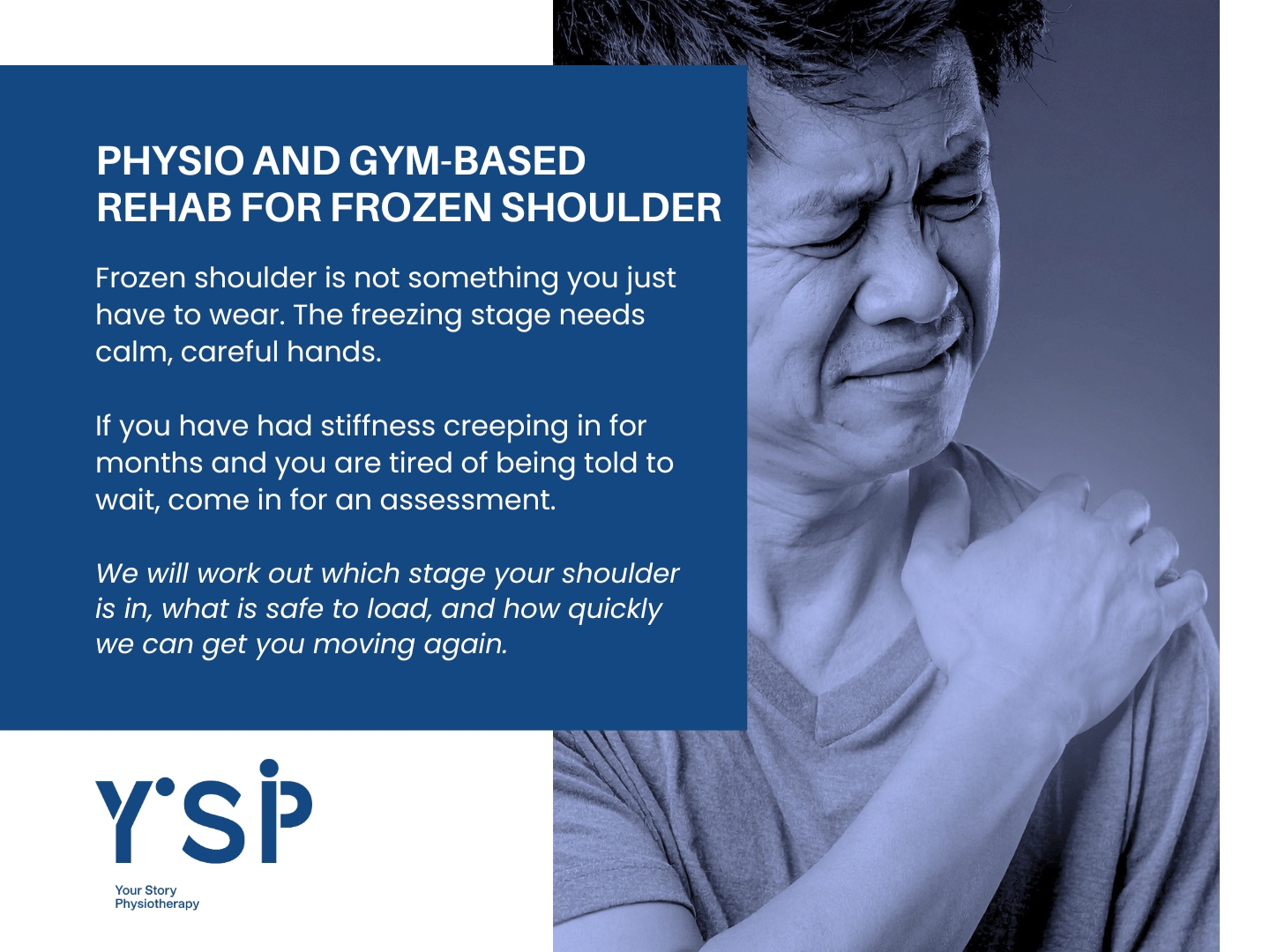
Frozen shoulder is not something you just have to wear. The freezing stage needs calm, careful hands. The frozen and thawing stages need a gym and a plan. Doing the first without the second is how shoulders end up stiff for years. Doing both is how women in their 50s get back to reaching, lifting, and working without a running commentary from their shoulder.
If you have had stiffness creeping in for months and you are tired of being told to wait, come in for an assessment. We will work out which stage your shoulder is in, what is safe to load, and how quickly we can get you moving again.
Support For Better Shoulder Function
 Sunshine is a thriving suburb in Melbourne’s west, known for its multicultural community and convenient amenities. Your Story Physiotherapy provides physiotherapy services across Sunshine and the surrounding suburbs.
Frozen shoulder can affect many aspects of daily life, from simple household tasks to recreational activities and work responsibilities. Learning more about Frozen Shoulder Treatment: How Physio and Gym-Based Rehab Restore Your Movement can help you better understand the condition, its stages, and the rehabilitation approaches commonly used to support recovery. Your Story Physiotherapy provides physiotherapy and exercise-based rehabilitation tailored to individual needs and goals. For a consultation or further information about frozen shoulder and available rehabilitation services, contact Your Story Physiotherapy today. As a trusted Sunshine Physio clinic, the team is committed to supporting people throughout their rehabilitation journey and helping them work towards improved movement and function.


Contact Information:
Your Story Physiotherapy
149-153 Anderson Rd
Sunshine, VIC 3020
Australia
Abraam Mikhail
https://yourstory.physio/


Original Source: https://yourstory.physio/frozen-shoulder-treatment-physio-gym-rehab/